




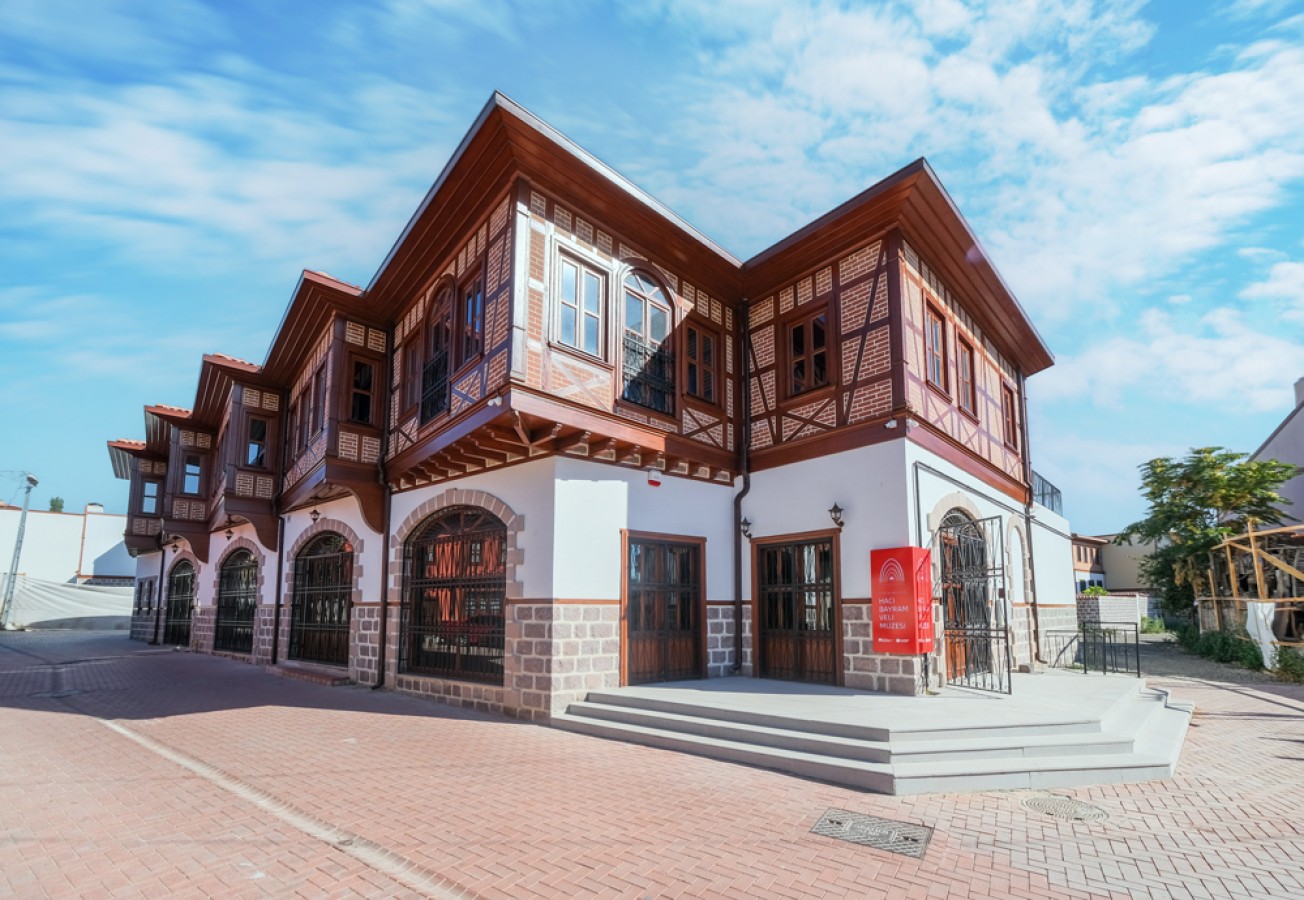
Hacı Bayram Veli Museum
Hacı Bayram Veli's Ankara is an Ahi city. Ankara was one of the centers of the Ahi order, founded in Kırşehir in the mid-13th century by Ahi Evran and primarily organized in the leather industry (tanning). The Ahis were quite influential in the development of the leatherworking trade in Ankara. Besides tanning and leatherworking, professions such as dyeing, saddlery, harness making, and locksmithing also flourished in Ankara.
Hacı Bayram Veli, who spent his childhood and youth in Ahi Ankara, returned to Ankara after completing his Sufi journey. Although the Ahi order had lost its effectiveness as an organization by then, it continued to exist as a tradition. The city, located at the center of Anatolian trade routes, possesses a unique ecological structure with its lands and vineyards. The greatest threats to the city's production- and craft-based system were Mongol pressure and the Interregnum period. In the political atmosphere the city faced, the solution to minimize the economic and social damage came from Hacı Bayram Veli and the Bayramiye Order. The Ahi organization united around him. The members of the Hacı Bayram Veli Dervish Lodge were the Ahi people and farmers of Ankara.
The Hacı Bayram Veli Museum, as one of the most important symbols of Ankara's city history and identity, was established through a collaboration between Ankara Altındağ Municipality and Ankara Hacı Bayram Veli University with the aim of promoting it nationally and internationally using a contemporary museology approach.