




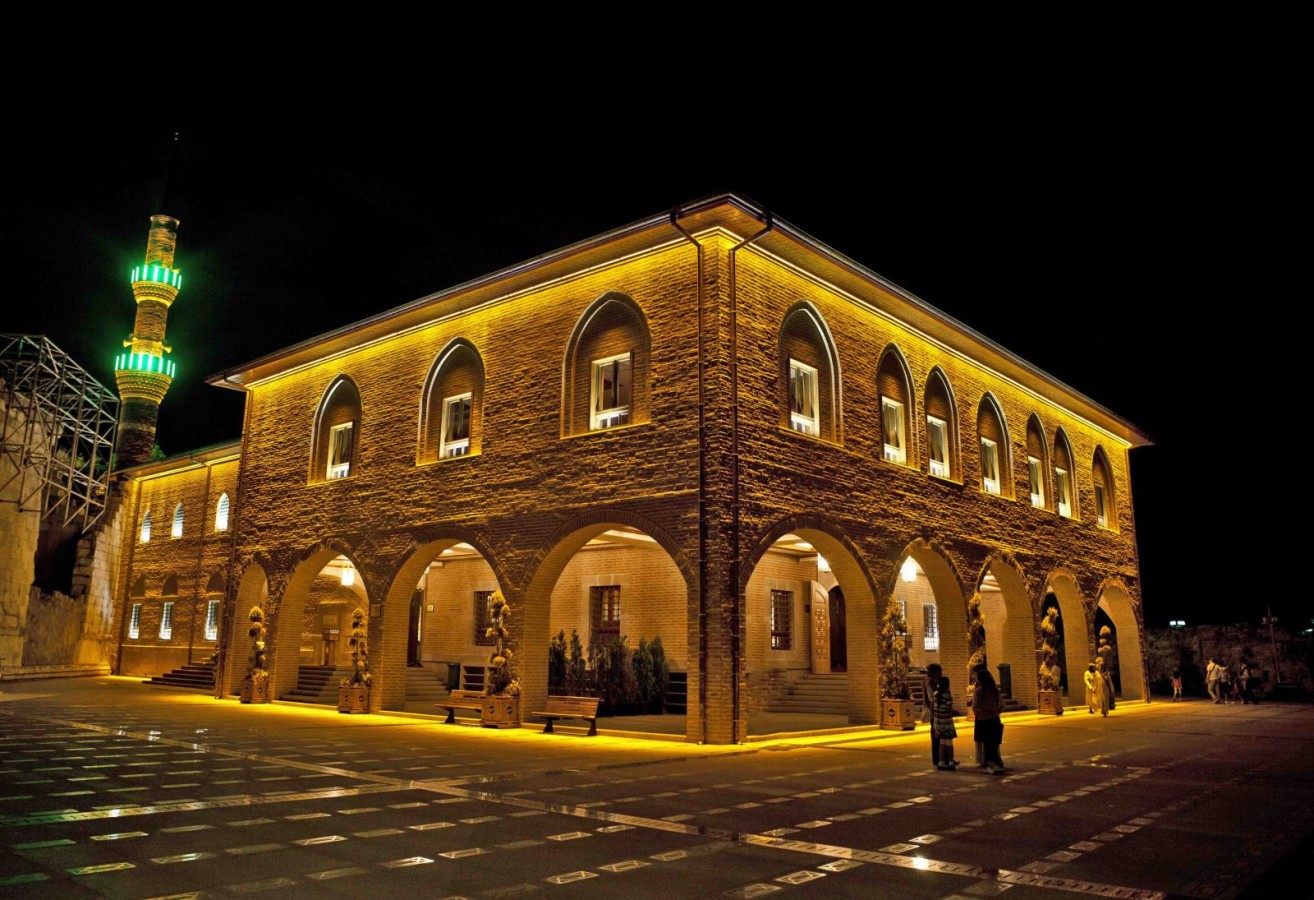
This is a historical mosque located in the Ulus neighborhood of Ankara's Altındağ district. Built in 831 AH (Islamic calendar), the mosque's original architect, Mehmet Bey, is unknown. The structure has a longitudinal rectangular plan, a stone base, brick walls, and a tiled roof. The mosque takes its name from the Hacı Bayram Tomb in its garden. Adjacent to the mihrab wall, the tomb was built in 1429. The square-plan, octagonal-drummed tomb is covered with a lead dome. Also located in the mosque's garden is the 18th-century Osman Fazıl Paşa Tomb. The mosque boasts a rich array of wooden and wood-on-wood decorations, as well as tile ornamentation. A minaret with two balconies stands on the southeast wall of the mosque. Repaired in 1714 by Mehmet Baba, a descendant of Hacı Bayram Veli, the mosque was also restored by the General Directorate of Foundations in 1940. The complex was most recently renovated by the Ankara Metropolitan Municipality in accordance with its original design and reopened for worship on February 14, 2011. The mosque has been modified to accommodate a total of 6,000 worshippers, with 4,500 in the indoor area and 1,500 in the outdoor area.