


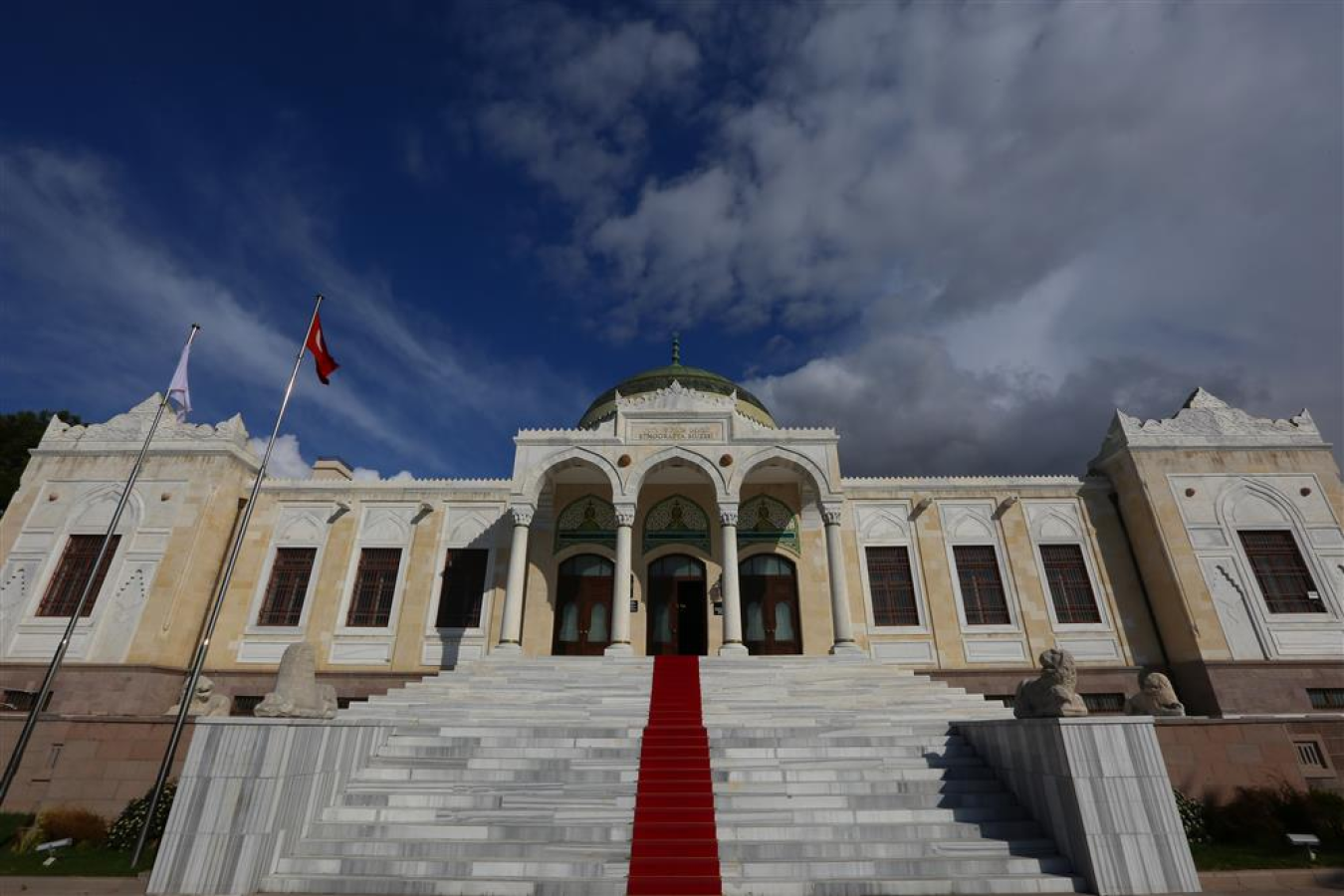
Located in Altındağ, the Ethnography Museum was established on the site formerly known as Namazgah Hill, where Friday prayers were held during the Turkish War of Independence. Initially intended as an archaeology museum, it was later decided to become a museum of painting and sculpture. It represents the centuries-old legacy of Anatolian Turkish culture. Operating since 1930, the Ethnography Museum displays examples of Turkish art from the Seljuk period to the present day. Its collection includes folk costumes, ornaments, shoes, clogs, various pouches, laces, borders, sashes, towels, bundles, bedspreads, bridal attire, groom's shaving kits, and carpets and rugs from various regions of Anatolia. The museum's collections include various artifacts representing Anatolian metalwork, Ottoman-era bows, arrows, flintlock pistols, rifles, swords and yatagans, Turkish ceramics and porcelain, Kütahya porcelain, items related to Sufism and religious orders, and plaques showcasing beautiful examples of Turkish calligraphy. The museum also houses a specialized library containing works on Anatolian ethnography and folklore, and art history. Mustafa Kemal Atatürk's remains were kept here until they were transferred to Anıtkabir in 1953. This section is currently preserved as a symbolic tomb in honor of Atatürk.