




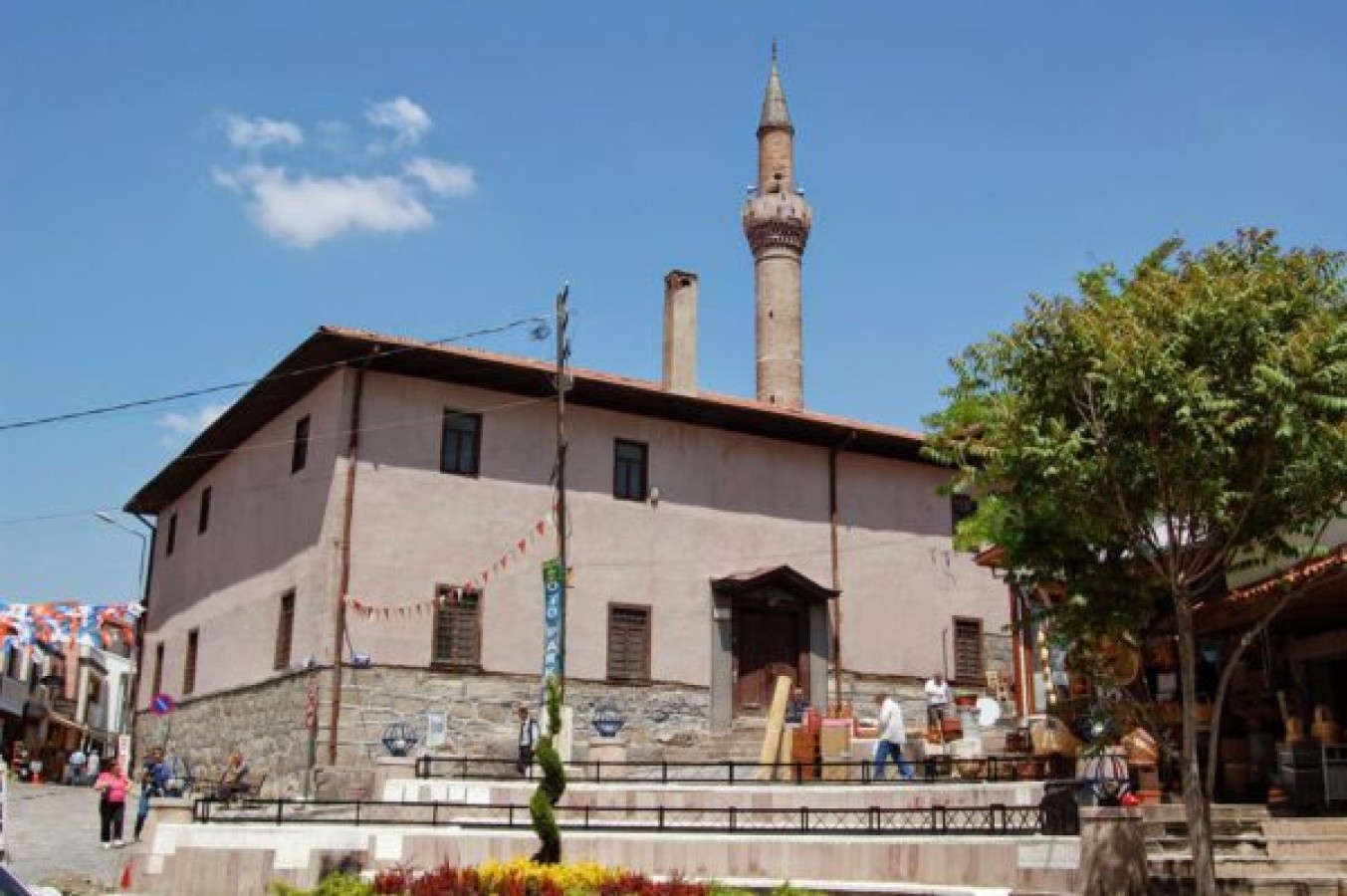
Built in 1382 by Ahi Elvan Mehmet Bey, it was later repaired in 1413 by order of Çelebi Mehmet. Located at the beginning of Koyunpazarı Street in Altındağ, Ankara, it dates back to the Seljuk period. It is an example of a mosque with wooden pillars. Access to the building is via a three-tiered staircase. The prayer hall consists of four sections, separated by three rows of four wooden columns each. Doric and Corinthian column capitals, collected from Byzantine and Roman structures in the region, are placed on top of the wooden columns. These columns support a roof covered with tiles. The mosque, which features a wooden support system and wooden ceiling, a common feature in many Seljuk mosques, has a magnificent rectangular plan. One of the most beautiful parts of the mosque is its pulpit. It shows great similarities in woodwork and shape to the pulpits of the Sultan Alaattin Mosque and the Arslanhane Mosque. There are two inscriptions superimposed on the pulpit door.